NAS Guides · Published 2026-11-10
Roku NAS Setup: Playing Your Own Library Through DLNA and Plex
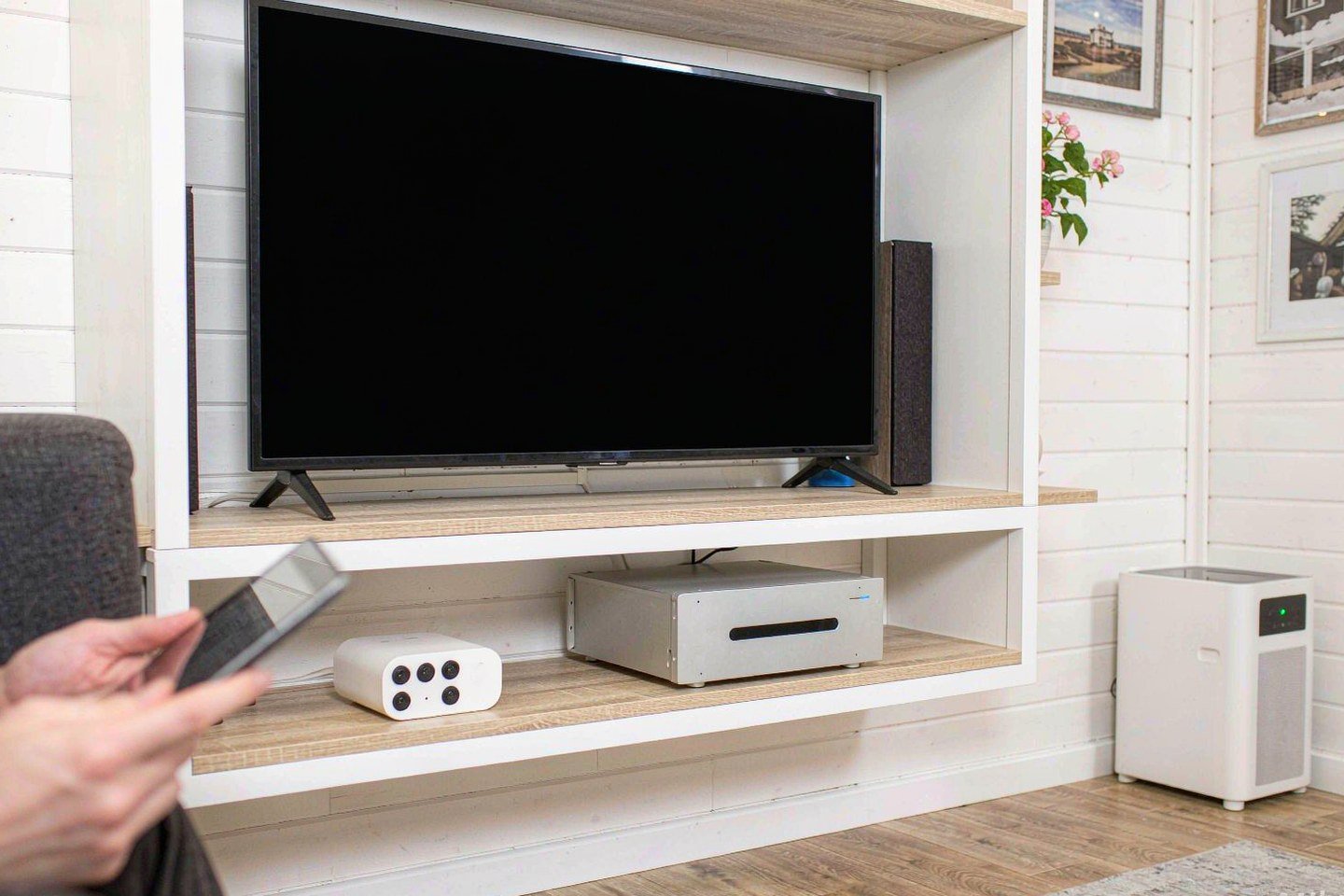
Direct answer up front, then the trade-offs that matter. This page covers roku and answers: how to roku remote to tv.
By Leo · Hardware Reviewer
Beat: Drive bays, RAID and expandability · How we review
Quick Answer
Fox completed its $22 billion acquisition of Roku on November 6, 2026, and Roku shares stopped trading on the Nasdaq the same day. Nothing breaks on your device this week, and the DOJ says Fox committed to keeping the platform open and neutral for at least three years. If that still feels thin, the durable answer is a second food source: a NAS on your network, feeding your own library to the TV through DLNA or a Plex or Jellyfin client. One thing trips people up — your Roku has no built-in SMB client, so the mounting happens on the NAS and your PC, never on the TV itself.
Key Takeaways
- Fox closed the deal on November 6, 2026, ahead of its originally projected first-half-2027 window; each share you owned converted to $95.30 in cash plus 0.9799 Fox Class A shares.
- The DOJ's commitments run for at least three years: non-Fox content stays on the platform, search does not discriminate, and you can still rearrange your home screen.
- The TV reaches your library two ways — a DLNA server through the Media Player app, or a Plex or Jellyfin client. Direct SMB and NFS mounting is not part of the documented feature set.
- The Media Player app also reads USB drives formatted FAT16 through HFS+, which covers most external disks you already own.
- A tracked price for the Roku Pro Series OLED TV stood at $1,000 on Amazon as listed in CNET's review (checked 2026-10-28); a NAS side entry such as the Synology DS225+ was tracked at $364.99 back in early October 2026.
What Changed
Friday's close moved your streaming device from an independent company into Fox's digital division. Under the merger agreement, shareholders receive $95.30 in cash and 0.9799 Fox Class A shares per share, which leaves Fox stockholders with roughly 74 percent of the combined company and former shareholders about 26 percent (Deadline, 2026-11-06). Fox expects $400 million in merger-related cost savings within two years. Anthony Wood, who founded the company more than two decades ago, joins Fox's board and becomes Co-Chair of the new Fox Digital Platforms division, a group that contains the TV platform, Tubi, Fox One, and Red Seat Ventures.
The timing is notable. The deal was proposed in June 2026 with completion projected for the first half of 2027; it closed in under five months. The platform reaches more than 100 million US households, which is why the Justice Department took a public position on it.
That position matters more than the money. The DOJ's Antitrust Division concluded the transaction was not likely to harm competition, and it published the commitments Fox made: carry non-Fox content for at least three years, do not discriminate against rival content in search results, keep letting you reconfigure apps on the home screen, and maintain data firewalls around non-Fox content data for at least three years (Deadline, 2026-11-06; The Verge, 2026-11-06).
Three years is not forever, and you should read it that way.
Who Is It For
A local NAS setup makes sense for a specific kind of owner, and you already know if that is you. Start with your library, not with the news. If your household stores hundreds of hours of home video, ripped discs you legally own, camera footage, or a media collection assembled over ten years, then depending on whatever app catalog a platform owner happens to promote is a real risk — catalogs shift, licenses lapse, and promotions crowd your home screen. A NAS keeps the files in your house and lets you point the TV at them directly.
It also suits you if you already back up your phone to a NAS. The same box that holds your photo archive can serve video to your living room. One device, two jobs.
Skip it if you mostly stream commercial apps and own no local files. A NAS adds cost, noise, and a setup afternoon for a library you do not have. Nothing in the Fox deal changes that calculus for you.
Key Specifications
Here are the numbers you can hold us to, straight from our tracked ledger.
Capacity and bays
The tracked hardware on the TV side is the Roku Pro Series OLED, a flat-panel OLED TV sold in 55- and 65-inch sizes (form factor verified against WIRED and CNET reviews, 2026-10-28). It has no drive bays — it is a television, and your storage lives on the NAS side. A 2-bay entry machine like the Synology DS225+ takes two SATA drives and was tracked at $364.99 in early October 2026; if you want more headroom, the 4-bay DS925+ was tracked at $749.76 the same month. Prices move, and we did not re-verify either figure this week, so treat them as October readings.
Connectivity
The tracked TV carries Wi-Fi 5 (802.11ac), four HDMI 2.1 inputs (two supporting 120Hz, one with eARC), and two USB ports, per the ledger's readings from 2026-10-28. The USB port is the one you are most likely to under-use: Roku's own documentation says the Media Player app plays your files from USB drives formatted FAT16, FAT32, NTFS, EXT2, EXT3, exFAT, and HFS+. That is almost every external disk in your desk drawer.
Software stack
The network path runs through the Media Player app, which Roku documents as playing personal media from a DLNA server on your local network. The tested list includes Windows Media Player, Serviio, Plex, Twonky, MiniDLNA/ReadyDLNA/ReadyMedia, PlayOn, and Synology (DSM 6.2.1). Plex, Serviio, WMP, and some Synology devices transcode automatically, per the same page. Jellyfin, the free open-source media system, maintains an official client for this platform that you can sideload or find through the channel store. What the documentation does not describe is any built-in SMB or NFS client — we could not find one, and we checked the official support pages before writing this.
What Is New
Two things are genuinely new this week. First, the ownership itself: the platform you watch is now part of Fox Digital Platforms rather than an independent Nasdaq listing, and the combined entity starts with stated savings targets and a new executive structure. Second, the DOJ commitments give you a documented promise to point at — three years of open platform behavior, written into the merger clearance.
What did not change is your device software. The operating system still updates on its own schedule, and our October 2026 coverage of OS 16 described the playback client exactly as it stands today. The deal affects corporate direction, not the DLNA stack on your TV.
If you want the blunt version: this is precisely why keeping a local path matters. Platform owners change. Your files should not depend on their mood.
How It Compares
Split the comparison into two halves, because the TV and the NAS do different jobs. The table below is generated from our spec ledger — dashes mean the ledger has no verified data for that field, and we do not borrow another product's numbers to fill your gaps.
| Field | Roku Pro Series OLED TV (55RAD5/65RAD5) | Synology DS225+ (2025) |
|---|---|---|
| Price (tracked) | Amazon (as listed in CNET review) $1000 (2026-10-28) | Amazon $364.99 (2026-10-02, stale) |
| Drive bays (SATA) | — | 2 bays |
| M.2 NVMe slots | — | 0 slots |
| Max bays with expansion | — | 7 bays |
| Hot-swap bays | — | Yes |
| CPU | — | Intel Celeron J4125 |
| CPU cores | — | 4 cores |
| Installed RAM | — | 2 GB |
| Max RAM | — | 6 GB |
| RAM slots | — | 1 slot |
| ECC RAM | — | No |
| 1GbE ports | — | 1 port |
| 2.5GbE ports | — | 1 port |
| Wi-Fi standard | Wi-Fi 5 (802.11ac) | — |
| USB ports | 2 ports | 2 ports |
| HDMI output | 4x HDMI 2.1 (2x support 120Hz, 1x eARC) | — |
| Form factor | Flat-panel OLED TV (55 or 65 inch) | Desktop tower |
| Weight | — | 1.3 kg |
| Warranty | — | 3 years |
_Sources: Review: Roku Pro Series OLED TV (WIRED) · Roku Pro Series OLED TV Review (CNET) · Synology official comparison (DS225+)_
_— = the ledger has no verified data for that field. Strikethrough = only an outdated reading exists._
Who Should Consider It
Worth it if your library is real — measured in terabytes, not gigabytes — and you can spare one afternoon for setup. Worth it if you already run phone backups through a NAS and want your TV to share the same box. Worth it, specifically this month, if the idea of a single corporation deciding what your home screen promotes bothers you enough to spend $364.99 on a 2-bay box (October 2026 tracked price) plus a drive.
Skip it if you stream commercial services only. Skip it if you want a set-and-forget appliance; a NAS is a small server, and small servers occasionally need your attention. The trade-off is straightforward: you exchange one afternoon of setup and occasional maintenance for a library that outlives any merger.
What Existing Users Should Know
Nothing breaks today. Your channels, your home screen layout, and your settings carry over — the DOJ commitments explicitly preserve your ability to reconfigure the home screen. If you already run Plex or a DLNA server against a NAS, the acquisition changes nothing in your pipeline.
Watch out for one assumption, though. The commitments are dated: three years of open behavior, three years of data firewalls. Whether Fox extends or quietly narrows them after that is something no source has answered yet, so treat any claim that the platform stays open forever as unconfirmed. When year three arrives, re-read the fine print yourself and judge the platform by what it does, not by what the memo says.
Real-World Scenario: SMB / WebDAV / NFS Cross-Protocol Mounting
This is the section where most guides get the architecture wrong, so we will be blunt with you.
What this changes for the use case
Your TV does not mount network shares. It has no documented SMB client, no NFS client, and no WebDAV browser; the official documentation describes USB playback and DLNA as the local routes, plus channel apps like Plex and Jellyfin. That means the cross-protocol work — the SMB mount you would set up for your laptop or a Steam Deck — happens on the NAS and on your PC, one step removed from the screen. You create an SMB share on your Synology (Control Panel, per-user permissions), copy your files into it from your PC over SMB, and the DLNA or Plex server on the same box reads that folder and serves it to the TV over HTTP. The mount is real; it just lives on the other side of the room. Understanding this distinction saves you an hour of hunting for a settings menu that does not exist.
Hardware and software requirements
Four pieces, all on the same LAN. First, a NAS with a shared folder configured through its admin panel — on your Synology, Control Panel governs per-user SMB permissions. Second, a server app on that NAS: the tested DLNA list includes MiniDLNA/ReadyDLNA and the Synology media server package, and Plex or Jellyfin are the heavier-duty options if you want watch-state sync and transcode control. Third, the Media Player app on your device — it comes pre-installed on some models, and the channel store carries it if not. Fourth, a path to get your files onto the share: your PC with SMB access does it in a drag-and-drop. Your tracked Pro Series OLED connects over Wi-Fi 5, which is workable for 1080p and compressed 4K; for sustained high-bitrate 4K, a wired connection or a strong access point earns its keep. Jellyfin's official client, maintained on GitHub, is your free-software alternative if you do not want a Plex account.
Limits, caveats, and who should skip it
Three honest limits. One: the tested-server list cites Synology DSM 6.2.1, which is a dated reference — current DSM 7.x releases are not on that tested list, so budget for a little trial and error even though MiniDLNA-class servers generally work. Two: transcoding costs CPU; the Celeron J4125 in your DS225+ handles one 1080p transcode comfortably, but direct playback of already-compatible formats is the smarter goal for you. Three: USB playback bypasses your network entirely, and for a handful of files it is the fastest route — just remember the app indexes USB content into a local database, and very large drives slow your first scan. Skip this whole scenario if your library is tiny; a $20 USB stick and the USB port beat a NAS for portability, and we would rather tell you that than upsell you.
Frequently Asked Questions
Does the TV support SMB shares?
Not natively. The official documentation for the Media Player app describes USB drives and DLNA media servers as your local playback routes, and we could not find any built-in SMB or NFS client in that documentation. To get files from an SMB share onto your TV, the share runs on the NAS, a server app such as Plex, Jellyfin, or MiniDLNA reads the share's folder, and your screen plays the stream the server provides.
Can it play files directly from a NAS?
Yes, through a server on the NAS rather than a direct mount. The Media Player app discovers DLNA servers on your local network, and the tested list includes Plex, Serviio, Twonky, MiniDLNA/ReadyDLNA/ReadyMedia, PlayOn, Windows Media Player, and Synology (DSM 6.2.1). Both endpoints must sit on your network. The server transcodes or passes through the file depending on the format your device supports.
Is Plex better than DLNA for this kind of TV?
For most households, yes, and the reason is state. DLNA playback is session-based, so your resume positions and watch history vanish between sittings, while a Plex or Jellyfin server tracks your progress, metadata, and multi-user profiles. The trade-off is cost and complexity: Plex transcodes and syncs but wants an account, and Jellyfin is the free open-source option with an official client for this platform. A bare MiniDLNA server wins only on simplicity.
What does the Fox deal mean for my TV?
Short term, very little changes on your device. Fox closed the $22 billion acquisition on November 6, 2026, and the DOJ's clearance includes commitments that run at least three years: non-Fox content stays available, search results do not discriminate against rivals, and you keep the ability to rearrange your home screen apps. Longer term, the commitments have an expiry date, so the local-NAS path remains the only part of your setup that no corporate reorganization can touch.
What is a NAS and do I need one?
A NAS is a small file server that sits on your home network and holds drives your whole household can reach. It backs up your phones, stores your video, and serves media to devices like your TV. You need one if you have a growing library of personal files you do not want living inside someone else's cloud. You do not need one if you stream commercial services exclusively and keep no local files of your own.
How much does a home NAS cost?
An entry 2-bay machine such as the Synology DS225+ was tracked at $364.99 in early October 2026, before drives. In the same window, an 8TB NAS-class drive such as the WD Red Plus was tracked at $431 and the Seagate IronWolf 8TB at $347, so your working two-drive start means the box plus two drives at those October readings. The tracked Roku Pro Series OLED TV itself listed at $1,000 on Amazon as cited in CNET's review (checked 2026-10-28). Prices drift, so re-check before you buy.
Sources
- The Verge's 6 November 2026 report: Fox has officially closed its $22 billion acquisition of Roku, announced on Friday; the deal was first announced in June and Fox now controls a streaming platform that reaches more than 100 million US households; the DOJ says Fox committed to keeping Roku an open and neutral content partner post-merger, including carrying non-Fox content for at least three years, not discriminating against rival content in search results, and letting users rearrange apps and tiles on the home screen — https://theverge.com/streaming/1028629/fox-roku-acquisition-close (accessed 2026-11-10)
- Deadline's 6 November 2026 closing report: Roku shares stopped trading on the Nasdaq as of Friday; the closing came less than five months after the deal was proposed in June, well ahead of the initially projected first-half-2027 window; under the merger agreement Roku stockholders receive $95.30 in cash and 0.9799 Fox Class A shares per Roku share; Fox expects $400 million in merger cost savings within two years; Anthony Wood joins Fox's board and becomes Co-Chair of Fox Digital Platforms — https://deadline.com/2026/11/fox-corp-closes-roku-acquisition-1237215436 (accessed 2026-11-10)
- Deadline's 6 November 2026 report on the DOJ statement: the Antitrust Division concluded the transaction was not likely to result in harm to competition; commitments include carrying non-Fox content on Roku for at least three years, not discriminating against non-Fox content in search results, allowing users to reconfigure applications on the home screen, and maintaining data firewall commitments for at least three years — https://deadline.com/2026/11/fox-roku-merger-justice-department-antitrust-division-1237215897 (accessed 2026-11-10)
- Roku's official support article on Roku Media Player, read 10 November 2026: the app plays personal video, music and photos from a USB drive (FAT16, FAT32, NTFS, EXT2, EXT3, exFAT or HFS+) or from a DLNA media server on the local network; tested servers include Windows Media Player/Center, Serviio, Plex, Twonky, MiniDLNA/ReadyDLNA/ReadyMedia, PlayOn and Synology (DSM 6.2.1); Plex, Serviio, WMP and some Synology devices transcode automatically — https://support.roku.com/article/208754908-How-to-use-Roku-Media-Player-to-play-your-videos-music-and-photos (accessed 2026-11-10)
- Jellyfin's official Roku client repository on GitHub, read 10 November 2026: the jellyfin-roku project is the Jellyfin project's Roku client application, part of the free-software media system Jellyfin — https://github.com/jellyfin/jellyfin-roku (accessed 2026-11-10)
- Synology's DSM help page on shared folder permissions: shared folders on a Synology NAS are created from Control Panel, and per-user or per-group read/write permissions control who can reach each folder over file services such as SMB — https://kb.synology.com/en-us/DSM/help/DSM/AdminUtils/file_share_permission_desc (accessed 2026-11-10)
Run your own 5-year cost comparison with the on-site calculator
Every figure above is attributed in the Sources list — put your own drive count and subscription tiers into the calculator to see where you land.
Open the cost calculator →Related reading
Was this article helpful?
One tap, no account and no comment box. It tells us which guides are actually worth updating.
How many drive bays is your NAS?
This is how we decide which setups to cover next.
Thanks.
Need help with a specific setup?
Storage choices depend on your drives, your budget and how many people share the box. Tell us what you are building and we will point you at a configuration that fits — no obligation, no sales script.
Affiliate Disclosure: SecureNAS Hub may earn a commission from qualifying purchases made through links on this page, at no extra cost to you. Facts and figures are attributed in the Sources list; nothing on this page is a fabricated test result. See our full disclosure. Product images are either supplied by the manufacturer or clearly labelled as illustrative renders; each one is captioned accordingly. Last reviewed 2026-11-10.